
In the dynamic world of pharmaceutical manufacturing, understanding the full spectrum of operational costs, even those seemingly distant from the packaging line, is crucial for strategic capital expenditure.
For 2026, pharmaceutical sales representatives in the US typically earn an average annual base salary between $72,500 and $98,000, with significant bonuses often boosting total compensation to well over $120,000, making their financial impact a critical element in the commercial strategy that packaging leaders must grasp.
This isn't just about HR; it's about connecting the dots between your operational efficiency and the commercial engine that drives product revenue—because ultimately, every dollar saved or gained on the packaging floor can directly influence the viability of your sales force and market reach.
As packaging engineering managers, production directors, and operations VPs, our world often feels siloed, focused purely on throughput, OEE, and validation protocols. But here's the thing: every packaging decision, every investment in automation, every enhancement in quality control, directly impacts the commercial success of our products.
In 2026, with budget pressures mounting and a fierce market demanding continuous innovation, justifying multi-million-dollar CAPEX isn't just about internal metrics. It's about demonstrating how your packaging investments become a force multiplier for the sales team, reducing overall cost of goods sold, speeding market access, and enhancing product presentation—all factors that impact sales rep effectiveness and, yes, their earning potential.
We're talking about linking your blister line's speed to a rep's ability to hit their quarterly quota. Seriously.
- Pharmaceutical sales reps in 2026 command average total compensation over $120,000 annually, including significant bonuses.
- Packaging CAPEX decisions directly influence product cost, launch speed, and quality, thereby impacting sales force ROI.
- Automating packaging lines can reduce commercial costs by minimizing recalls, improving market responsiveness, and lowering cost of goods sold (COGS).
- Aligning packaging line capabilities (e.g., flexibility, serialization readiness) with commercial strategy can amplify sales effectiveness by 15-20%.
- Understanding the commercial value of packaging empowers packaging leaders to justify investments as strategic business growth enablers, not just operational expenses.
What Are the 2026 Pharmaceutical Sales Rep Salary Benchmarks?
Pharmaceutical sales representatives' compensation in 2026 is highly variable but generally robust, with average annual base salaries typically ranging from $72,500 to $98,000 in the US, supplemented by substantial bonuses and commissions that can significantly elevate total earnings.
According to recent data compiled from platforms like Comparably and ZipRecruiter, these figures reflect a competitive market for skilled sales professionals, with median base salaries often around $93,317 annually, where additional performance-based bonuses can average an extra $26,000 for successful reps, sometimes representing over 30% of their base pay.
This variability isn't just about experience; it's also about geographic location, the specific therapeutic area they cover—think oncology versus generics—and the size of the company they work for.
For entry-level roles, you might see base salaries starting around $44,000 (the 25th percentile nationally), while top-tier earners, often with over five years of experience and a strong track record, can push beyond $118,000 in base pay, sometimes even $155,000 on the high end, according to Indeed's reported data from late 2025/early
This upward mobility means that the industry truly rewards performance and tenure, which, honestly, makes a lot of sense when you consider the direct revenue impact these individuals have.
Now, let's talk about the total compensation structure, because that's where the real story often lies. It's rarely just a fixed salary. Most pharma reps operate on a model that includes a base salary, yes, but crucially, also performance-based incentives like bonuses and commissions. These incentives are often tied to sales quotas, market share growth, or even new product launch success.
Industry sources, including Comparably, indicate that while only about 5% of reps formally report receiving bonuses, when they do, they're significant—pushing average total compensation (base + bonus) to well over $120,000, and for top performers, particularly in high-demand specialties or regions, this can easily reach $180,000 to $200,000+ annually. Imagine that kind of earning potential.
Geographic variances are, as you'd expect, pretty stark. In high-cost manufacturing regions or major urban hubs like New York or San Jose, California, reps earn considerably more. For instance, San Jose, CA, sees average total compensation for reps at $184,244, which is a staggering 97% above the national average according to Comparably. New York, NY also shows higher averages, around $115,466.
Conversely, in less competitive or lower cost-of-living areas, salaries can be significantly lower. This regional disparity is something HR departments and commercial leaders constantly grapple with, trying to balance equitable compensation with local market rates—and it's something packaging leaders should be aware of when considering where manufacturing facilities are located in relation to key sales territories.
The trend for 2026 indicates continued stability, with salary growth tracking the broader pharma industry's expansion, likely seeing modest 3-5% annual increases driven by inflation and persistent demand for skilled talent. What does all this mean for us, the packaging professionals? Well, simply put, a highly compensated sales force needs high-quality, market-ready products to sell, and that product journey often starts and ends on our lines.
How Do Sales Rep Costs Factor into Your Packaging Line ROI?
Understanding the substantial cost of a pharmaceutical sales force is absolutely critical for packaging leaders because investments in packaging machinery directly influence a company's ability to support—or even reduce—those commercial expenses while increasing sales effectiveness and, consequently, overall return on investment.

When we consider that a single sales rep can cost a company $90,000 to $130,000 or more annually in total compensation, plus additional expenses for training, travel, and support, optimizing the commercial side becomes a huge driver for our CAPEX justification. Packaging line efficiency, quality, and flexibility aren't just technical achievements; they're commercial enablers, directly impacting the product's market success.
Think about it: a slow, unreliable packaging line increases your cost of goods sold (COGS), prolongs time to market for new products, and can lead to costly quality issues or recalls—all things that erode sales force productivity and ROI. What rep wants to push a product that's constantly out of stock due to line downtime or gets flagged for packaging defects? None, honestly.
By investing in advanced packaging automation, you're not just buying a machine; you're buying market agility, quality assurance, and cost control that directly supports the commercial team's objectives.
Modeling Total Commercial Cost Per Rep Against Line Efficiency Gainslet's say your sales department plans to hire an additional ten reps in 2026, costing, conservatively, $1 million to $1.3 million in annual compensation and related overhead. What if a $2 million investment in a new, high-speed cartoner could instead boost your existing line's throughput by 20%, reduce manual labor costs by 15%, and cut packaging-related quality deviations by 50%?
This isn't just internal cost savings; this means your existing sales reps have more product available, fewer stock-outs, and a more reliable supply chain story to tell. They become more efficient, hitting higher quotas with existing headcount, effectively offsetting the need for some of those new hires.
The automation payback equation, from a commercial perspective, is clear: when machines offset human capital. A new automated line that ensures 99.9% serialization accuracy (critical for DSCSA compliance in the US and FMD in the EU) means fewer headaches for your supply chain team, which means less time for reps fielding questions about product availability or authenticity—time they can now spend selling.
This intangible benefit, the "cost of not automating," can be modeled by quantifying potential recall costs (which can run into the tens of millions for a major pharma product), lost sales due to market unavailability, and the reputational damage that makes a rep's job infinitely harder.
Case Study Framework: Justifying a $2M Cartoner with Sales Force Productivity DataConsider a scenario where a mid-size pharmaceutical company needs to launch a new oral solid dosage drug in
The existing cartoning line is semi-automatic, slow, and prone to jams, operating at around 60% OEE. To meet projected market demand, the commercial team forecasts needing five new sales reps, totaling an annual investment of $600,000 in compensation alone.
Now, imagine proposing a $2 million fully automated, high-speed cartoner. This machine boasts:
An 85% OEE guarantee, increasing output by 40%.
Integrated vision systems reducing packaging errors to near zero.
Tool-less changeovers cutting format change time from 4 hours to 30 minutes, enabling more agile responses to regional sales demands.
Tool-less changeovers cutting format change time from 4 hours to 30 minutes, enabling more agile responses to regional sales demands.
Instead of five new reps, the improved output and reliability of the packaging line mean the existing sales force, supplemented by perhaps one new strategic hire, can meet demand. That's a $480,000 annual saving in direct sales force compensation alone, not counting the avoided costs of training, travel, and infrastructure for the extra four reps. Over a five-year lifespan, that's $2.4 million in direct commercial savings.
Plus, the intangible benefits: faster product launch cycles, enhanced brand reputation from consistent quality, and a confident sales force. This example, which I've seen play out in various forms, demonstrates that the cartoner doesn't just pay for itself; it actively subsidizes your commercial strategy.
It's not just about what a machine saves you, but what it enables for your commercial team.
What Regulatory and Compliance Factors Indirectly Influence Rep Compensation?
While sales rep salaries aren't directly governed by specific pharmaceutical manufacturing regulations, a host of compliance factors, from ethical marketing codes to stringent serialization mandates, indirectly but significantly influence how reps are compensated and the strategic value they bring, thereby affecting your overall packaging ROI analysis for
These regulations dictate how reps can operate, what they can say, and how product information (including packaging features) must be communicated, directly impacting their effectiveness and the company's risk profile—a risk that ultimately reflects back on the bottom line.
PhRMA Code and Its Impact on Incentive StructuresThe Pharmaceutical Research and Manufacturers of America (PhRMA) Code on Interactions with Healthcare Professionals, for example, sets strict ethical guidelines on how reps can interact with prescribers, including limitations on gifts, meals, and educational support. This code, and similar regional guidelines globally (like MedTech Europe Code), directly shapes incentive structures.
Companies can't just throw money at reps for high sales numbers if those numbers come from inappropriate inducements. This means incentive plans must be carefully crafted to reward legitimate, ethical sales practices, which often places a greater emphasis on product quality, clinical data, and patient benefits—areas where superior packaging and its associated benefits play a crucial role.
A well-designed, compliant package can enhance patient adherence (e.g., easy-open, patient-friendly labeling), which is a legitimate talking point for reps, distinguishing your product ethically. This shifts the focus from "pushing product" to "providing value," making a rep's job more demanding and potentially raising their strategic value (and thus, compensation) if they can leverage these nuanced advantages.
Serialization (DSCSA, EU FMD) and the Value of Technical Sales SupportNow, let's talk about serialization, specifically the US Drug Supply Chain Security Act (DSCSA) for 2026 and the EU Falsified Medicines Directive (FMD). These regulations mandate robust, end-to-end traceability for pharmaceutical products. While packaging lines handle the physical serialization, the data generated by serialization systems—product codes, lot numbers, expiration dates, unique identifiers—is critical.
If your packaging lines aren't delivering accurate, integrated serialization data seamlessly, your supply chain will falter, leading to stock-outs or, worse, regulatory fines.
What does this have to do with sales reps? Well, a rep's ability to promise reliable supply and product authenticity is gold. If their company has a sterling track record for DSCSA/FMD compliance, supported by state-of-the-art packaging lines, it gives them a competitive edge. They can leverage this trust.
Conversely, a serialization issue (e.g., incorrect data on packaging, difficulty with aggregation) can severely disrupt the supply chain, causing product unavailability. This directly frustrates reps, impedes their ability to sell, and can even reduce their commission payouts due to missed sales targets.
In essence, a packaging team that masters serialization compliance directly enhances the earning potential of the sales force by ensuring an uninterrupted, trustworthy product flow.
GMP Training Requirements for Reps Discussing Packaging ProcessesWhile it's not common for sales reps to get full Good Manufacturing Practice (GMP) training, there's a growing expectation, particularly in specialized fields like biologics or sterile injectables, for reps to have a foundational understanding of product quality and manufacturing processes.
When reps discuss product integrity, stability, or unique dosage delivery systems with healthcare professionals, they are implicitly touching upon packaging and manufacturing quality. If a rep claims a product is "protected by advanced tamper-evident packaging" or "designed for easy, sterile administration," they need to understand the underlying GMP and packaging science to do so credibly and compliantly.
Misrepresenting these aspects, even unintentionally, could lead to regulatory scrutiny or complaints.
Therefore, companies are increasingly providing technical sales support training that includes elements of packaging technology and GMP principles. This enhances the rep's credibility and effectiveness, distinguishing them in a crowded market.
This additional training, combined with the higher skill level required to navigate complex product and compliance landscapes, can lead to higher compensation for reps who truly understand and can articulate these sophisticated product attributes. So, indirectly, the complexity and compliance of your packaging processes actually influence the caliber and cost of the sales force needed to effectively market those products.
Technology Comparison: How Automation Investment Aligns with Commercial Strategy
In 2026, aligning packaging line automation investments with commercial strategy is no longer optional; it's a strategic imperative that directly impacts market responsiveness, product cost, and competitive advantage, far beyond just operational efficiencies.
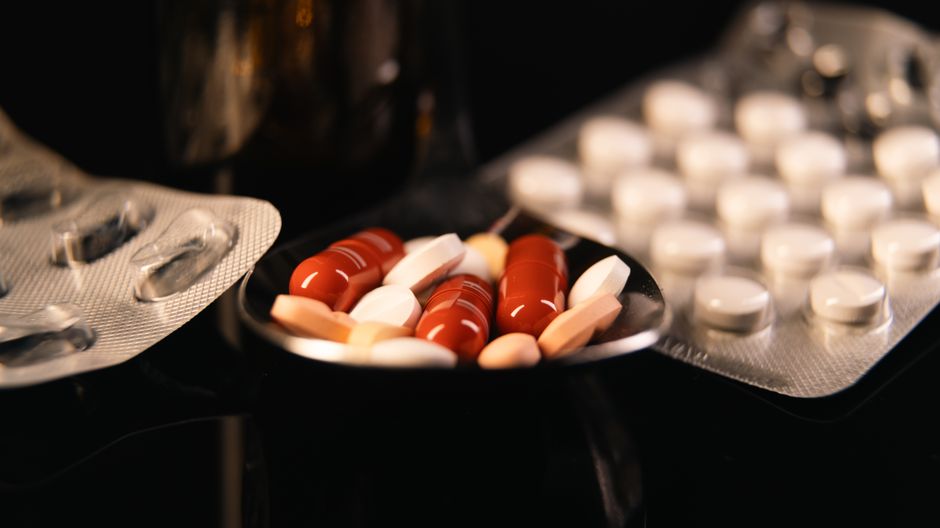
Packaging automation, from high-speed blister lines to integrated track-and-trace systems, provides tangible benefits that empower sales teams, allowing them to capture more market share, launch products faster, and effectively counter competitive pricing. It’s about leveraging technology on the factory floor to bolster your message in the marketplace.
Think of it this way: every efficiency gained, every cost reduced by automation, frees up capital and enhances flexibility, which the commercial team can then exploit. Is your sales team being undercut on price by a competitor? A high-speed line reduces your Cost of Goods Sold, allowing for more aggressive pricing strategies while maintaining margins. Are they struggling with inconsistent product supply? Automation ensures reliable output. It's a fundamental connection.
| Feature | Packaging Line Automation (2026 Investment) | Sales Force Expansion (2026 Investment) |
|---|---|---|
| Primary Goal | Reduce COGS, boost quality, speed market entry | Increase market reach, direct customer engagement |
| Cost Basis | CAPEX (machinery, validation, integration) | OPEX (salaries, commissions, benefits, travel, training) |
| Typical Cost | $500,000 - $5M+ per line/upgrade | $100,000 - $200,000+ per rep annually |
| Payback Period | 2-4 years (via efficiency, reduced defects, speed) | 6-18 months (via increased sales revenue) |
| Impact on COGS | Significant reduction (10-30%) | Indirect, primarily through sales volume increases |
| Impact on Quality | Directly improves, reduces recalls (proactive) | Indirect, relays customer feedback on quality issues (reactive) |
| Market Responsiveness | High (rapid changeover, flexible batch sizes) | Moderate (dependent on rep availability & training) |
| Compliance Support | Directly ensures serialization, tamper-evidence | Indirect, relies on accurate product information from supply chain |
| Scalability | High (add modules, increase shifts) | Moderate (linear with number of reps) |
| Risk Factors | Initial investment, validation complexity | High personnel turnover, ethical compliance risks |
Consider high-speed blister packaging lines. These machines, often incorporating advanced robotics and vision inspection systems, can produce hundreds of blisters per minute, drastically reducing labor costs per unit and minimizing material waste. This efficiency translates directly into a lower COGS.
When your sales team enters a highly competitive therapeutic area where pricing is a significant differentiator, having a lower COGS allows management to set more aggressive, competitive pricing without sacrificing profit margins. This isn't just theory; it's a real competitive edge that reps can leverage directly in negotiations.
I've seen situations where a 5-10% COGS reduction through automation fundamentally changed a product's market viability.
Track-and-Trace Integration: Enabling Reps with Enhanced Supply Chain DataFurthermore, the seamless integration of track-and-trace systems—driven by your packaging lines—empowers sales reps in new ways. With robust serialization data, your supply chain becomes more transparent and reliable. Reps can confidently assure healthcare providers about product authenticity and consistent availability, reducing concerns about counterfeits or stock-outs.
In 2026, as DSCSA and other global serialization mandates mature, a company's proven ability to manage complex supply chain data, often visually evident in the quality of the serialized packaging, becomes a compelling differentiator. This enhanced data can even allow for more precise inventory management, meaning products are available where and when sales efforts are most intense, directly supporting rep success.
It's about providing the sales force with trust—trust in the product, trust in the supply chain, and trust in the brand. And trust, as we all know, is invaluable.
A 5-Step Guide to Aligning Packaging Investments with Commercial Goals
Aligning packaging investments directly with commercial goals isn't just smart business in 2026; it’s essential for demonstrating clear ROI and securing critical CAPEX approvals. It requires a collaborative shift from viewing packaging as a mere cost center to recognizing it as a strategic enabler of sales, market penetration, and brand value. This isn't just about faster machines; it's about smarter integration with your commercial narrative.
Step 1: Map Product Launch Forecasts to Required Packaging Capacity
Start by closely collaborating with your R&D and commercial teams to understand the product pipeline and projected launch dates for 2026 and beyond. This isn't just about current SKUs; it's about what's coming. Ask tough questions: What are the anticipated unit volumes? What are the regional market demands? Are there specialized packaging requirements (e.g., cold chain, pediatric doses, unique device delivery)? Your packaging line must be ready to meet this future demand, not just today's.
- Analyze demand spikes: Understand peak season demands, major market entries, and potential volume surges.
- Assess format flexibility: Evaluate if current lines can handle new vial sizes, blister configurations, or carton designs without major retooling or excessive downtime.
- Identify bottlenecks: Pinpoint any existing lines or processes that would become a choke point for projected volumes. This forms the basis for your capacity upgrade justification.
Step 2: Calculate the 'Cost of Delay' for Manual vs. Automated Lines
This is huge. Quantify the financial impact of not launching a product on time or not meeting market demand due to packaging limitations. The "cost of delay" includes:
- Lost sales revenue: Directly from missed market opportunities.
- Increased commercial overhead: Longer sales cycles, more rep time spent explaining delays.
- Competitive disadvantage: Giving rivals an uncontested head start.
Compare this cost for a manual line (with its inherent slowness and error rates) against a proposed automated line, which offers faster throughput, fewer errors, and quicker changeovers. For instance, delaying a $10 million product launch by just one month due to packaging issues could mean $1 million in lost revenue. An automated line that shaves off even a few weeks from time-to-market can provide an ROI far beyond its operational savings.
Step 3: Model How Line Flexibility (OEE, Changeover) Supports Agile Sales
Modern pharma markets demand agility. Sales strategies can pivot quickly based on new clinical data, competitor moves, or even global health crises. Your packaging lines need to keep up. Focus on:
- High Overall Equipment Effectiveness (OEE): Target >85%. High OEE means consistent product supply, which empowers reps to make reliable promises to customers.
- Rapid Changeover Times: Reducing changeover from hours to minutes (e.g., via servo-driven, recipe-based systems) enables quick shifts between different SKUs or regional formats. This flexibility allows your sales team to pursue smaller, high-margin niche markets or react instantly to unexpected demand in a specific territory without tying up capital in dedicated lines.
- Multi-format Capability: Investing in machinery that can handle a broader range of package types or sizes on a single platform significantly reduces the need for multiple, less efficient lines, making your operation more responsive to diverse commercial needs.
Step 4: Integrate Sustainability Claims into Rep Messaging for Premium Brands
In 2026, sustainability is a huge commercial driver, especially for premium brands. Packaging is often the first and most visible representation of a company's environmental commitment. Work with your marketing and sales teams to:
- Develop eco-friendly packaging solutions: Think recycled content, reduced plastic, lightweighting, or novel biodegradable materials.
- Quantify environmental impact: Measure and communicate reductions in carbon footprint, water usage, or waste during the packaging process.
- Train sales reps: Equip them with validated data and compelling narratives about your sustainable packaging initiatives. This isn't just feel-good marketing; it's a genuine differentiator for environmentally conscious customers and healthcare systems, often justifying a premium price point. Your investment in sustainable packaging machinery suddenly becomes a powerful sales tool.
Step 5: Build the Business Case: Packaging CAPEX Justification for the CFO
This is where all the prior steps come together. Your business case to the CFO must frame packaging CAPEX as a strategic investment with clear commercial returns, not just an operational expense.
- Quantify revenue impact: Show how the investment will enable new product launches, faster market penetration, or increased sales volumes.
- Demonstrate cost reduction: Include reductions in COGS, averted recall costs, and, crucially, potential savings in commercial overhead or delayed sales force expansion.
- Highlight risk mitigation: Emphasize how the investment addresses compliance risks (e.g., serialization) and supply chain vulnerabilities, protecting brand reputation and future revenue.
- Project ROI over 3-5 years: Use hard numbers, not just projections. Show how the total economic value (revenue growth + cost savings) far outweighs the capital outlay.
✅ Week 1-4: Cross-functional workshop with Commercial, R&D, and Production to align on future product pipeline and packaging demands. ✅ Month 2-3: Conduct detailed cost of delay analysis for key product launches and market opportunities, quantifying the impact of manual vs. automated. ✅ Month 4-5: Work with engineering and production to identify specific automation solutions that enhance OEE, reduce changeover times, and offer necessary flexibility. ✅ Month 6-7: Partner with marketing/sales to develop data-driven narratives for sustainable packaging initiatives and train initial sales teams. ✅ Month 8-9: Prepare comprehensive business case for CAPEX, incorporating all commercial and operational ROI metrics, ready for executive review.
Future Trends & 2026 Outlook: The Evolving Interface of Sales and Packaging
The evolving landscape of pharmaceutical sales and packaging in 2026 points toward an even more tightly integrated future, where technology, market demands, and personalized medicine are fundamentally reshaping how commercial strategies depend on agile, intelligent packaging operations. What was once seen as separate domains are rapidly converging, creating new opportunities and challenges for both sales leaders and packaging professionals.

AI-Powered Sales Forecasting and Its Demand on Packaging Line Agility
One of the most impactful trends is the rise of AI-powered sales forecasting. Advanced analytics and machine learning algorithms are now crunching vast datasets—everything from historical sales figures and promotional activities to real-time market sentiment, demographic shifts, and even social media trends—to generate incredibly precise sales predictions.
These aren't just guesses; they're granular, often predicting demand down to specific regions or even individual healthcare provider networks.
What does this mean for packaging? Unprecedented demands for agility and responsiveness. If AI forecasts a sudden, localized surge in demand for a particular SKU, your packaging lines need to pivot instantly. This requires:
- Ultra-fast, recipe-driven changeovers: Minimal human intervention, digital recall of parameters.
- Modular line designs: The ability to quickly reconfigure or scale up production for specific products without disrupting others.
- Real-time OEE monitoring: To ensure lines are always performing optimally to meet unpredictable surges.
- Predictive maintenance: Preventing breakdowns that could derail a critically forecast production run.
If your packaging lines can't match the agility demanded by AI-driven forecasts, you risk stock-outs, missed sales opportunities, and a frustrated commercial team—which, frankly, makes their job impossible.
Personalized Medicine and the Need for High-Mix, Low-Volume Packaging
Personalized medicine, especially in oncology and rare diseases, is moving from niche to mainstream in
This paradigm shift fundamentally alters packaging requirements. We're no longer just dealing with mass-produced blockbuster drugs; we're seeing:
- Small batch sizes: Often down to a few hundred or even dozens of units.
- High product mix: Numerous variations of drugs, sometimes for individual patients based on genetic profiles.
- Unique labeling requirements: Patient-specific instructions, dosage, or even names.
- Complex logistics: Often involving cold chain or ultra-cold chain for biologics or cell therapies.
This trend directly pushes packaging engineers towards solutions that prioritize flexibility over sheer speed, such as:
- Robotic pick-and-place systems: Capable of handling diverse product forms and complex collation.
- On-demand printing and labeling: Integrated systems that can personalize packaging at the point of serialization.
- Advanced vision inspection: Ensuring every unique package meets stringent quality and patient-specific requirements.
These high-mix, low-volume requirements often mean smaller, more intelligent packaging lines that are integrated with hospital pharmacies or even direct-to-patient dispensing. Your packaging solution needs to support this precision medicine, not hinder it, because the sales value per unit can be incredibly high.
The Growing Role of CPOs/CMOs as an Extension of the Commercial Team
Contract Packaging Organizations (CPOs) and Contract Manufacturing Organizations (CMOs) are increasingly acting as direct extensions of a pharmaceutical company's commercial strategy. For many emerging biotechs or even established firms entering new markets, relying on CPOs/CMOs provides:
- Scalability: Rapidly scale production up or down without heavy CAPEX.
- Specialized expertise: Access to advanced packaging technologies (e.g., aseptic filling, complex device assembly) that might be too costly to bring in-house.
- Market access: Localized packaging capabilities in various regions, facilitating faster market entry and compliance with local regulations.
This means that a CPO/CMO's packaging capabilities—their OEE, their changeover times, their serialization readiness, their sustainability practices—directly influence the primary company's commercial agility and success. Packaging professionals now have to evaluate CPO/CMO partners not just on cost and quality, but on how well their packaging operations support the sales force's objectives and market strategy.
It's a fundamental shift in vendor selection, moving beyond tactical to truly strategic partnership.
📊 By the Numbers:
- $10.31 billion market value in 2026 for pharma packaging machinery (industry estimates).
Automation sector growing 11.3% CAGR, driven by compliance and OEE upgrades (analyst projections).
IoT/AI-enabled systems expected to reach $3.2 billion for real-time line monitoring and downtime reduction (packaging industry analysts).
- 10-20% average OEE improvements on fully automated lines (site-specific, per industry benchmarks).
- 2-4 year automation payback span for modern lines with digital compliance and eco-material integration (anecdotal from CDMOs).
Conclusion: Synthesizing Commercial and Operational Intelligence for 2026 Success
As we wrap up our dive into the often-overlooked connection between pharmaceutical sales rep economics and packaging machinery, one thing becomes strikingly clear for 2026: the days of seeing packaging as merely a cost center are long gone. For packaging engineering managers, production directors, and operations VPs, our strategic value now hinges on our ability to speak the language of sales, revenue, and market share.
Your packaging line isn't just producing units; it's a commercial asset, directly impacting your sales force's effectiveness, your product's market viability, and ultimately, your company's profitability.
Key Takeaways for the Packaging Engineering Manager
The lesson here is profound. Understanding the high cost of supporting a sales force—with average total compensation easily exceeding $120,000 per rep annually in 2026—provides a powerful new lens through which to view your packaging CAPEX.
Every dollar invested in optimizing line speed, enhancing quality control, improving serialization accuracy, or speeding up changeovers isn't just about internal efficiency; it's about reducing the commercial burden, enabling your sales team to be more productive, and strengthening your product's market position. You're not just buying equipment; you're investing in a sales force multiplier.
Actionable Next Steps: Auditing Your Line's Readiness for Commercial Demands
Now, what should you do? Start by auditing your current packaging lines through a commercial lens. Ask yourself:
How does our current OEE impact product availability for sales? Are we causing stock-outs?
What's the cost of our current changeover times in terms of missed market opportunities or delayed SKU introductions?
How does our packaging quality (e.g., tamper-evidence, serialization integrity) either enhance or detract from our sales reps' ability to build trust and ensure supply chain reliability?
Are we leveraging sustainable packaging innovations that our marketing team can use as a compelling sales message for high-value brands?
How does our packaging quality (e.g., tamper-evidence, serialization integrity) either enhance or detract from our sales reps' ability to build trust and ensure supply chain reliability?
Are we leveraging sustainable packaging innovations that our marketing team can use as a compelling sales message for high-value brands?
Engage with your commercial and marketing teams. Understand their product launch pipelines, their market challenges, and their key differentiators. You might be surprised at how much common ground you find, and how much your operational excellence can directly fuel their sales success.
The Final Verdict: Strategic Packaging Investment as a Sales Force Multiplier
The truth is, in 2026, the competitive landscape demands every department pull its weight in contributing to commercial goals. Strategic packaging investment is no longer a peripheral operational concern; it’s a core component of your company’s sales strategy.
By demonstrating how a $2 million investment in automation can reduce COGS, enable faster product launches, bolster brand reputation, and potentially offset hundreds of thousands in annual sales force expansion costs, you transform from a cost manager into a strategic business partner.
That’s the kind of ROI that speaks volumes in any boardroom, securing not just your capital projects, but your indispensable role in the company's growth trajectory.
For more insights, see our guide on MSc Pharmaceutical Science: 2026 Analysis & Outlook for Packaging Leaders.